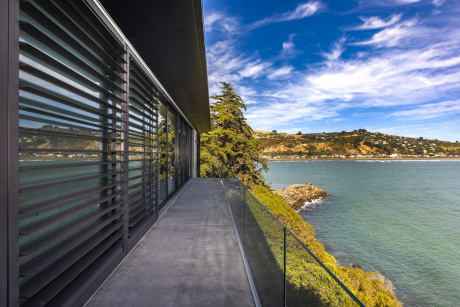
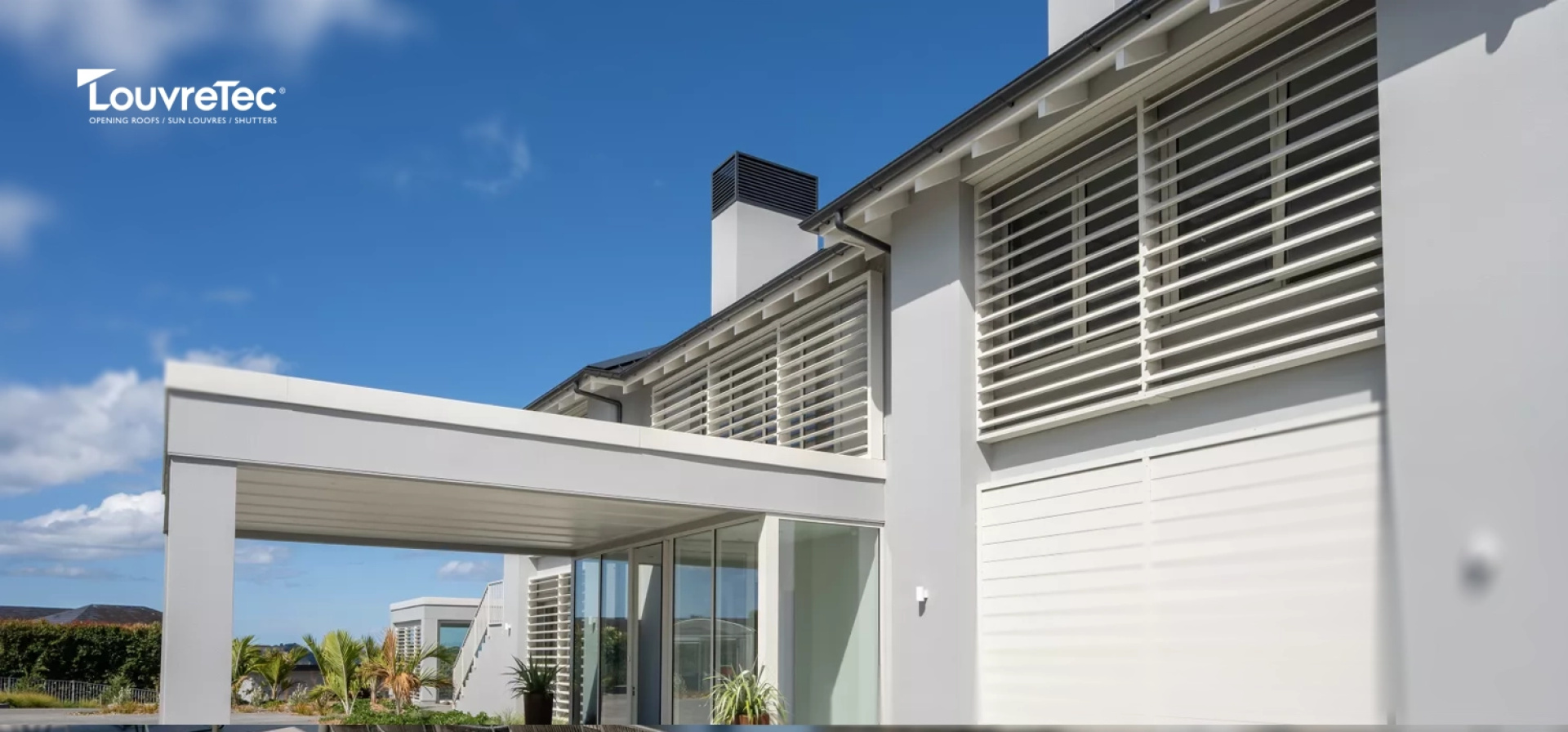
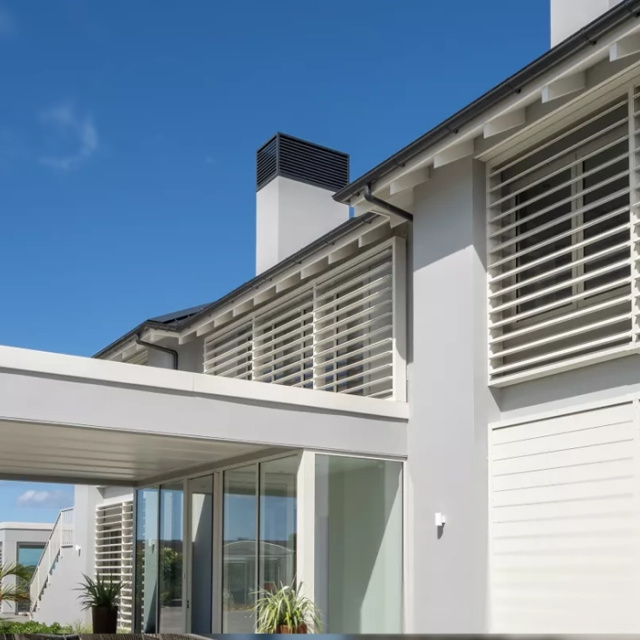
Most outdoor areas need two things at once. Privacy from neighbours. And a space that still feels open, airy, and worth spending time in. A solid fence or rendered wall solves the first problem. It kills the second.
Rectangular sun louvres do something different. They screen sightlines, filter light, and let air flow through, all without closing off the space. They suit patios, pool areas, side boundaries, balconies, and facades. And they look good doing it.
This article covers where to use them, how to orient them, which profiles suit different spaces, and how to choose between fixed, hand-operable louvre panels and motorised sun louvres.
Call 1300 601 660 or make an enquiry to talk through your project.
What You Need To Know:
- Louvre panels screen views while keeping airflow and light.
- They suit patios, pool zones, side boundaries, balconies, and window facades.
- Fixed, hand-operable, and motorised options are available depending on the level of control you need.
- Louvretec's Rectangular Sun Louvres Collection includes ten profiles, from the slim 95 Bella Vista to the large-span RL600.
- They work vertically or horizontally, which changes how they screen and shade.
What Is A Rectangular Sun Louvre?
A rectangular sun louvre is a flat or box-profile aluminium blade used in privacy screens, shade panels, and sun-control systems. The blades sit within a frame and can be fixed at a set angle, adjusted by hand, or motorised to open and close as needed.
Ten profiles are available, ranging from 95mm to 600mm wide. They come in flush and weatherboard-look styles, and are available in powder-coat, anodised, and woodgrain finishes.
Why Do They Work So Well For Privacy And Shade?
They screen without shutting the space down
A solid wall gives you privacy. It also gives you a dead corner that nobody wants to sit in. Louvre blades screen sightlines at the angles that matter without blocking airflow or making the space feel boxed in. You control how much neighbours see based on blade angle and spacing.
They suit the way Australians use outdoor spaces
Australian outdoor living blurs the line between inside and outside. These systems complement that. They're part wall, part screen, part design feature. Louvretec's Sun Louvre Systems are designed for the Australian climate, built for coastal conditions, and available in finishes that work with contemporary residential architecture. For Australian homes, aluminium privacy screens in Australia are a practical, low-maintenance choice that suits everything from coastal suburbs to inland properties.
Fixed, hand-operable, or motorised: you choose the level of control
Not every space needs a motorised system. Sometimes a fixed panel at a set angle is exactly what's needed. Other times, you want to adjust privacy depending on the time of day. The three operating formats give you that choice without locking you into one approach.
Where To Use Them
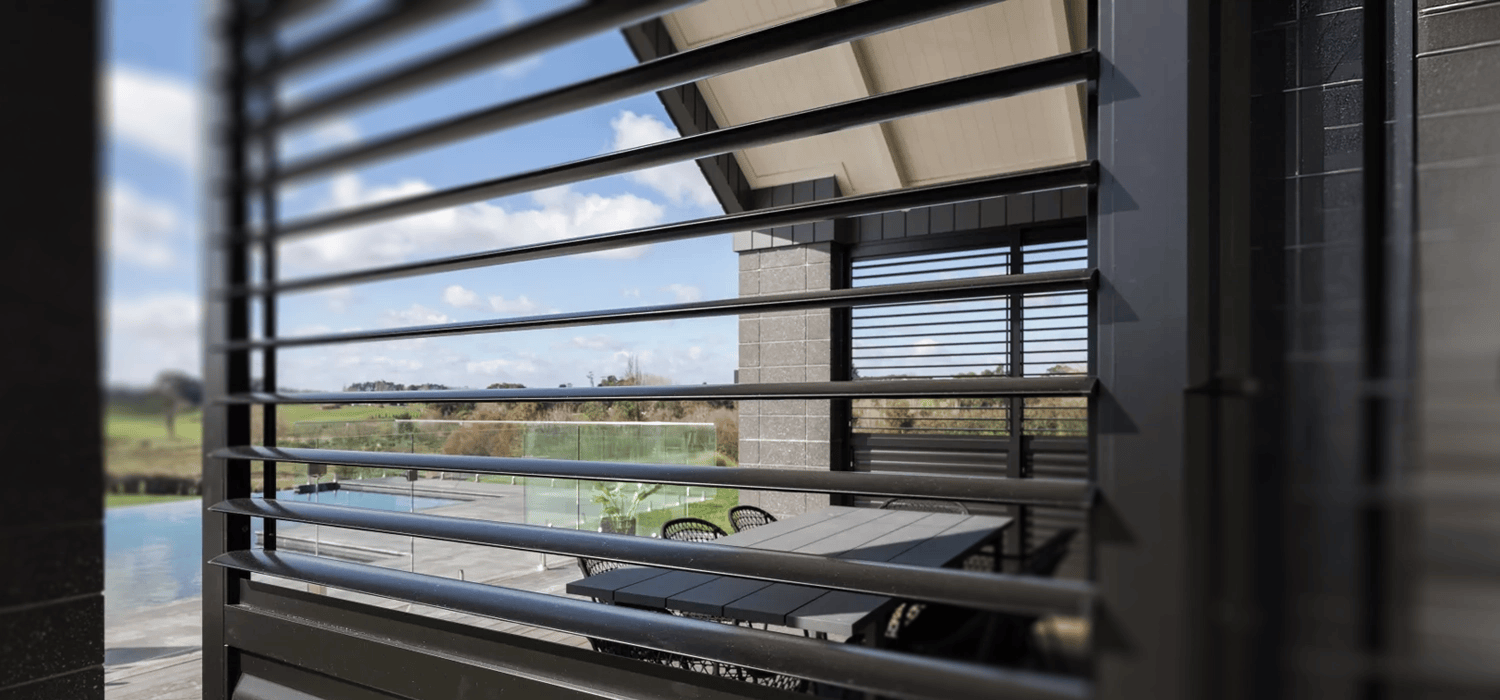
Patio and alfresco privacy screens
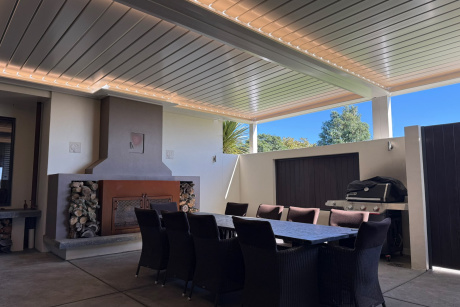
Outdoor privacy screens for patios are one of the most common applications. If a neighbour's upstairs window overlooks your outdoor dining area, a rectangular sun louvre privacy screen on the boundary or attached to the pergola frame solves it without making the space feel enclosed. It defines the outdoor room and adds a design element at the same time.
Poolside panels
Pool areas often need screening from multiple angles. Rectangular sun louvre panels handle this well. They reduce direct sightlines without creating a solid surround that traps heat or blocks the breeze. Aluminium suits the wet environment too.
Side boundary and fence-line screening
Where a timber fence feels heavy or visually bulky, louvre panels are a cleaner option. They sit lighter in the space, can match the home's exterior palette, and still control sightlines between properties.
Balconies and upper-level screens
The 165 Hi-Span Balustrade Louvre is specifically designed to Australian balustrade requirements. It works as an operable privacy infill for upper-level decks and balconies, so you can adjust privacy and airflow without a fixed-angle solution.
Vertical shade panels for afternoon sun and facades
Side-mounted louvre panels reduce glare from low-sun angles, particularly in the afternoon on west-facing windows. Blades mounted vertically on a facade also reduce solar gain on windows and glass doors. This makes them useful in residential and commercial projects where thermal control and privacy overlap.
Fixed, Hand-Operable, Or Motorised: Which Format Suits Your Project?
Fixed sun louvre panels
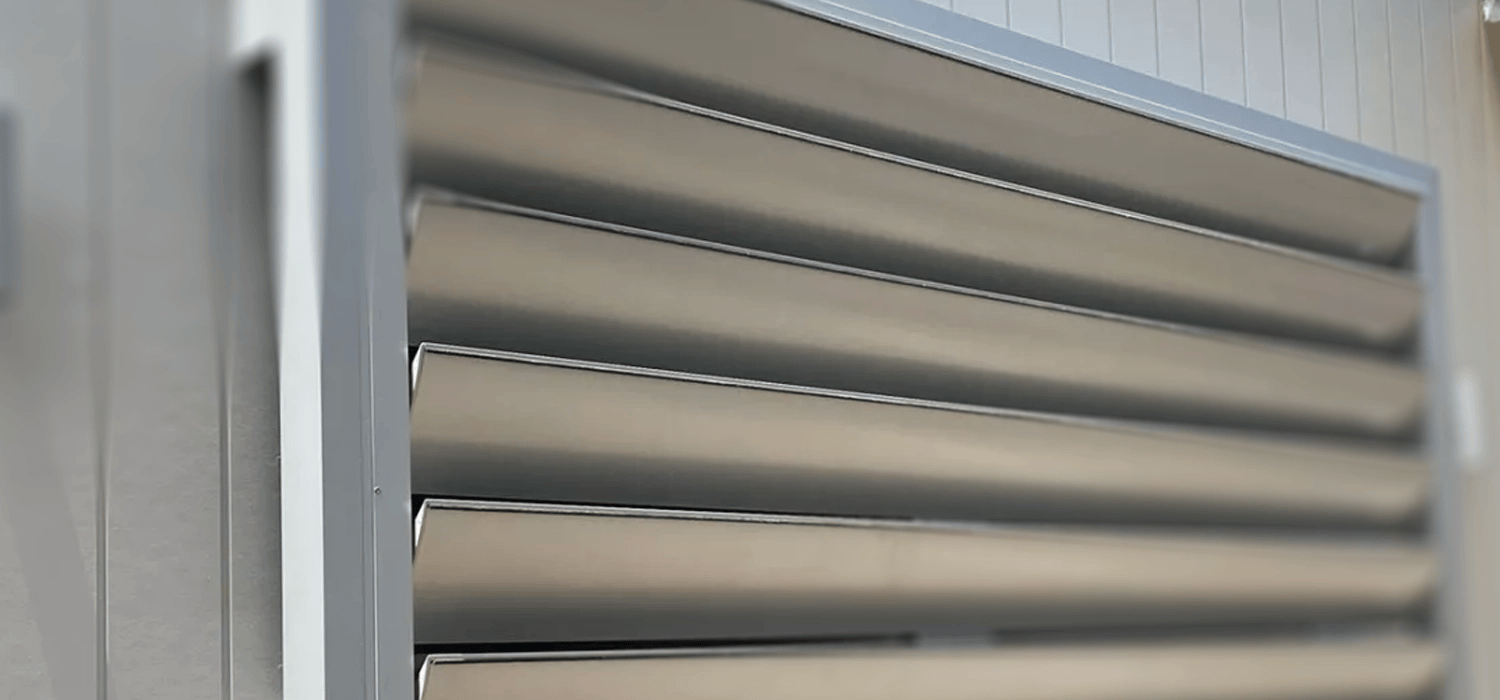
Fixed sun louvre panels are set at a permanent angle during installation. They suit spaces where the privacy and sun angle requirements are consistent, or where a clean, unchanging look is the priority. Several of Louvretec's profiles are available end-fixed or bracket-fixed at whatever pitch suits the site.
Hand-operable louvre panels
Hand-operable louvre panels let you adjust the blade angle manually. The 95 Bella Vista features a hand-pivot system suited to small- and mid-sized panels. This format suits homeowners who want occasional control over privacy or airflow without the cost of motorisation.
Motorised sun louvres
Motorised sun louvres suit larger installations, premium outdoor rooms, or situations where ease of use matters daily. Louvretec's Spiral Pivot system powers motorised blades across the wider collection, with control via remote or app for larger systems.
Vertical Or Horizontal: Does Orientation Matter?
Yes. It changes both the privacy outcome and the visual effect.
When vertical panels work better
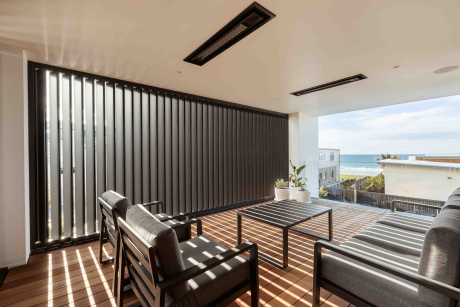
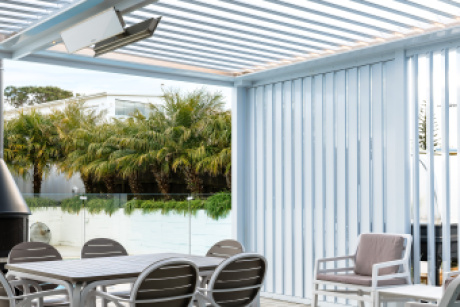
Vertical louvre panels suit direct overlooking from the side, narrow side passages, and boundary edges. The blade spacing controls sightlines from one direction without blocking light from above.
When horizontal panels work better
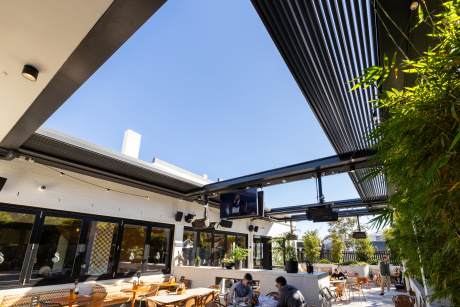
Horizontal panels suit broader shade coverage, facade rhythm, and wider screen spans. They're common on pergola frames and as overhead partial screening, where the goal is filtering light rather than blocking a specific view.
How orientation changes the light and view
Vertical blades cut horizontal sightlines. Horizontal blades reduce overhead light and top-down visibility. The orientation also affects airflow direction. Getting this right before installation saves the frustration of a screen that doesn't perform as expected.
Choosing The Right Profile
The Rectangular Sun Louvres Collection has ten profiles. Here's how to think about which one fits.
Slim profiles for compact and refined spaces
The 95 Bella Vista is Louvretec's smallest profile at 95mm wide. It suits narrow frames, balcony infills, and applications where a minimal look matters. A heavy-duty version is also available for larger exposed areas.
Mid-sized profiles for general residential use
The 180 Weatherboard Panel creates a classic weatherboard effect when closed. It's a strong choice for contemporary homes where the panel is as much a design feature as a privacy screen. Modern louvre privacy panels like this one suit homes where the screen needs to look considered, not just functional. The 120 Flush Mini and 180 Flush Midi are good general-purpose options in the same size range.
Larger profiles for statement screens and long spans
The RL450 and RL600 Square Louvres are built for large-span applications. They suit residential facades and boundary screens where visual impact and structural performance both matter.
Balustrade and infill applications
The 165 Hi-Span Balustrade Louvre is designed to Australian balustrade standards. It works as an operable privacy infill for decks, upper floors, and framed louvre panels. If your project involves balustrade compliance, this is the profile to start with.
Design Ideas Worth Considering
Define an outdoor dining zone without a full enclosure
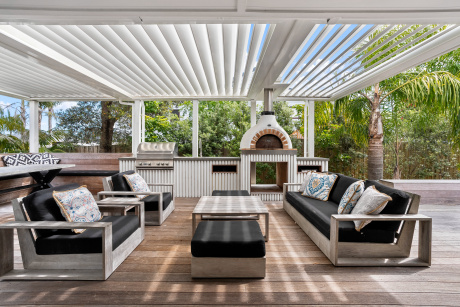
A louvre panel on one or two sides of an alfresco area creates a sense of enclosure without boxing the space in. Combined with an opening roof, it starts to feel like a proper outdoor room.
Screen a spa, pool shower, or outdoor bathroom
These areas benefit from visual privacy without four solid walls. A louvre screen on the exposed side provides the screening while adding a design element that a basic fence doesn't have.
Add texture to a plain wall or fence line
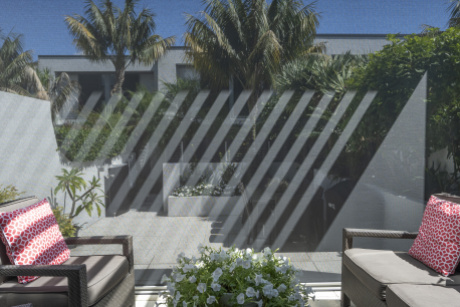
Blades mounted as a panel over a rendered wall or fence line bring architectural texture to a flat surface. The shadow pattern changes through the day and looks considered rather than just functional.
Build toward a complete outdoor room
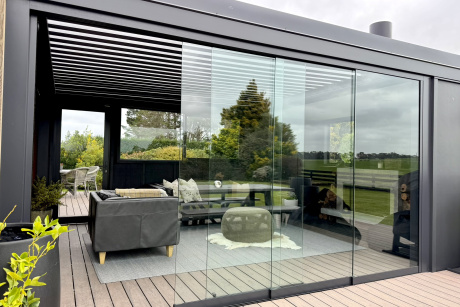
Louvretec's louvre panels work alongside the broader product range, including opening roofs, Slidetec glass doors, shutters, and outdoor blinds. A louvre screen as the side enclosure of an outdoor room is a natural starting point for a more complete outdoor living setup.
What To Sort Out Before You Enquire
How much privacy do you actually need?
A louvre panel at 45 degrees screens most direct angles. A steeper pitch gives more. Motorised or hand-operable systems let you adjust this depending on the time of day or season.
Where does the sun hit from?
Morning sun from the east, afternoon sun from the west, and overhead summer sun all need different responses. Getting blade angle and orientation right depends on knowing which direction the problem comes from.
Fixed look or adjustable control?
Fixed panels are simpler and visually cleaner. Operable panels give you flexibility. Think about whether your privacy or shade needs change throughout the day or year.
Decorative, functional, or both?
Louvre panels can do both. Knowing which is the priority helps narrow the profile and operating format before the first conversation with your dealer.
Does it need to work with a balustrade, window frame, or outdoor room?
This affects the profile choice and fixing method. The 165 Hi-Span is the starting point for balustrade-compliant applications in Australia.
FAQs About Rectangular Sun Louvres
What is a rectangular sun louvre?
It is an aluminium blade system used to create outdoor privacy louvre screens and shade panels. Blades can be fixed, hand-adjusted, or motorised. Louvretec's rectangular collection includes ten profiles from 95mm to 600mm wide.
Are rectangular sun louvres good for outdoor privacy?
Yes. They screen sightlines while keeping airflow and light. Blade angle and spacing determine the level of screening. They work on patios, pool areas, balconies, side boundaries, and facades.
Can rectangular sun louvres provide shade as well as privacy?
Yes. Vertical panels reduce afternoon glare. Horizontal panels filter overhead light. Facade-mounted louvres cut solar gain on windows. Shade screening for outdoor areas and privacy often work together in the same panel.
What is the difference between fixed and operable louvre panels?
Fixed panels are set permanently during installation and suit consistent conditions. Operable panels can be adjusted by hand or motor, and suit spaces where needs change through the day or year.
Can rectangular sun louvres be installed vertically and horizontally?
Yes. Vertical installation suits direct sightline screening. Horizontal installation suits broader shade and facade rhythm. Some profiles work either way, depending on the frame design.
Which rectangular sun louvre profile is best for my outdoor area?
The 95 Bella Vista suits slim applications. The 180 Weatherboard Panel suits contemporary residential screens. The RL range suits large-span projects. The 165 Hi-Span suits balustrade-compliant installations. Find your nearest dealer or call 1300 601 660 for a site-specific recommendation.