Australian weather changes fast. A clear morning can become a scorching afternoon, and that afternoon can turn into an unexpected downpour before dinner. A range of outdoor patio-roofing options can handle these scenarios well, but how do you choose between an opening roof vs a retractable roof?
We break down their comparisons and how to match the right system to your requirements.
At a Glance:
- Opening louvre roofs use rotating aluminium blades that can be adjusted from fully closed to fully open, giving you precise control over shade, airflow, and rain protection without altering the overhead structure.
- Retractable roofs retract aluminium blades from the frame, leaving the space fully open to the sky when you want it.
- Opening louvre systems are built for year-round, all-conditions use. Retractable systems trade some of that weather flexibility for full sky exposure on clear days.
- For hospitality venues and commercial spaces, both Retract Roofs and Opening Roofs work well. Both keep the space operational through changing conditions rather than shutting down when the weather shifts.
- The right choice depends on how you use the space, how often, and what conditions it needs to handle.
How an Opening Roof Works
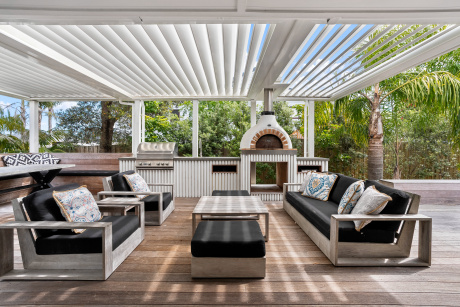
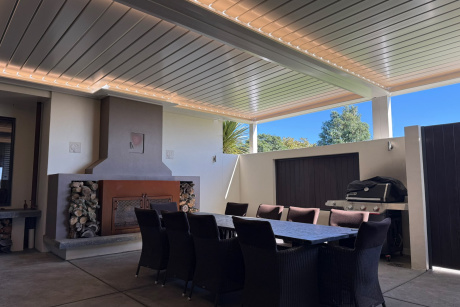
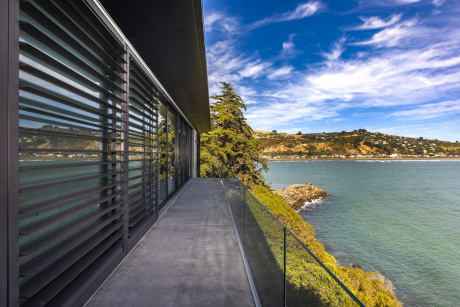
One of the clearest differences between an opening roof and a retractable roof is the structure itself. An opening louvre roof is built around a fixed aluminium frame with a series of horizontal blades running across it. Those blades rotate up to 180 degrees, allowing you to dial in exactly how much sun, shade, airflow, or rain protection you want at any moment.
At Louvretec, our Spiral Pivot system uses a concealed motor position, keeping the drive mechanism protected from the elements rather than exposed to them. The blade profile itself is shaped so that rainwater channels toward the frame gutters even when the louvres are only partially angled, which means you can sit under the roof during a light shower with the blades cracked open for airflow and remain dry.
The frame stays in place permanently, becoming part of the structure.
How a Retractable Roof Works
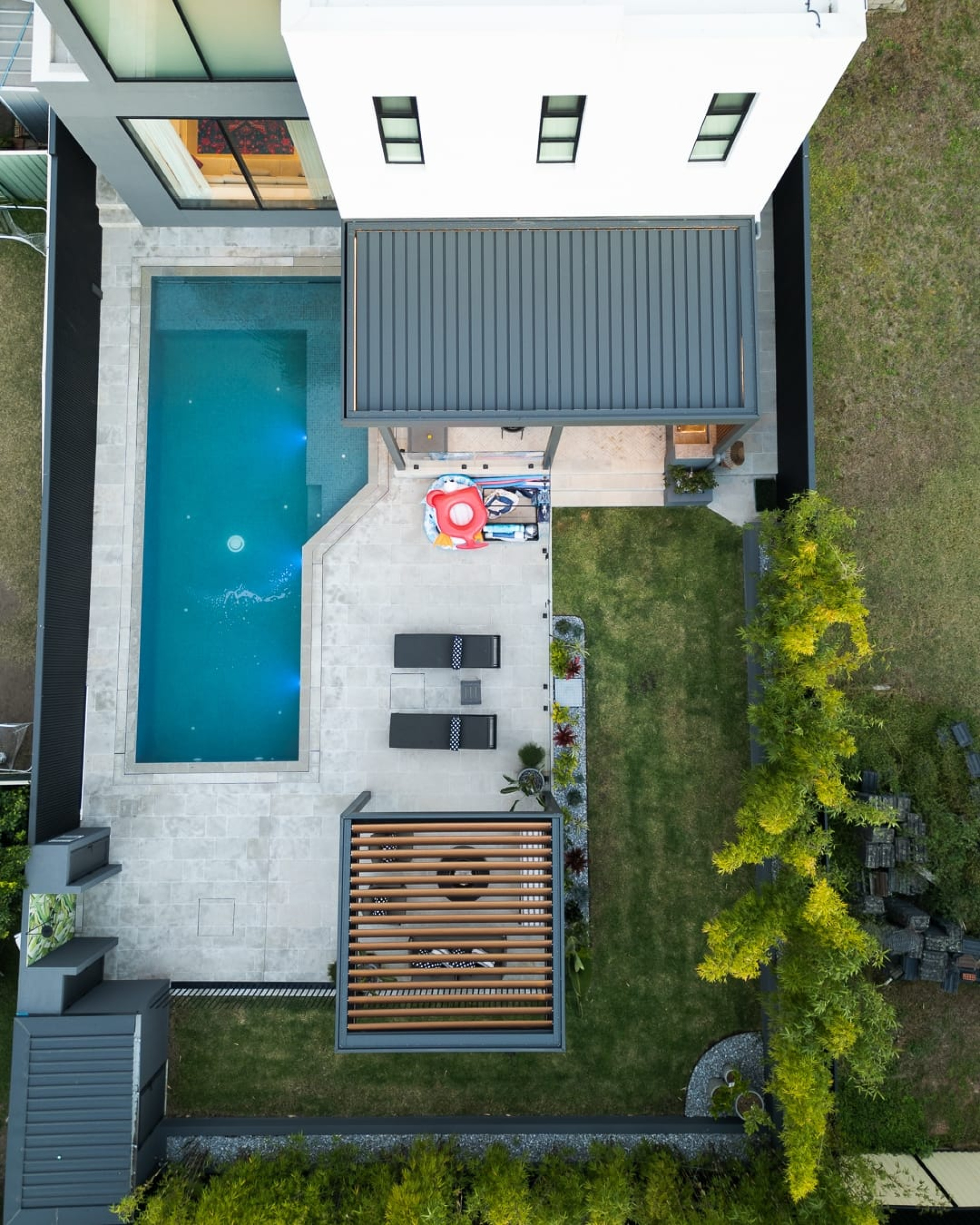
Our Louvretec retractable louvre roofs feature aluminium blades that slide physically back when retracted, leaving the structure clear overhead.
When our Retract Louvre Blades are back overhead, they are able to be rotated open and closed so you can still follow the sun as it moves across the sky. This means you get the best of both worlds: rotational control of a standard opening roof, which gives you angle adjustment for shade, airflow, or rain management, or take it one step further by retracting the louvre blades back when you want to enjoy the sky above.
Differences Between Opening and Retractable Roofs
| Opening Louvre Roof | Retractable Louvre Roof | |
|---|---|---|
| Available systems | 180/30 Slimline, 200/35 Slimline, 220/35 Slimline, 220/45 Alpine, 270 Translucent, 200 Suburban, Solar Powered | 220/35 Slimline Retract, 220/45 Alpine Retract |
| Blade material | Aluminium (270 Translucent option available) | Aluminium: new Slimline blade profile |
| Blade movement | Rotates up to 180° in a fixed frame | Retracts and rotates for operable shade and weather control when returned overhead |
| Sky exposure | Filtered. Frame and blades always present overhead | Full. Completely clear overhead when blades are retracted |
| Weather control | Continuous adjustment across all conditions | Full adjustment when blades are in position; fully open to the sky when retracted |
| Wind zone suitability | 220/45 Alpine is designed for high wind, coastal, and alpine conditions | 220/45 Alpine Retract is designed for high wind, coastal, and alpine conditions |
| Multi-roof compatibility | 220/35 and 220/45 Alpine pair directly with their retractable equivalents | Retract Louvres can also be specified as standard Spiral Pivot Opening Roofs; ideal for multi-roof projects |
| Motorisation | Motorised, hand-operable, or solar-powered | Motorised via Spiral Pivot system |
| Side infill options | Frameless glass, shutters, blinds | Frameless glass, shutters, blinds |
| Best suited for | Spaces needing precise, all-conditions control year-round across a range of sizes and budgets | Spaces where full sky exposure and all-conditions overhead control are both priorities |
About Opening Louvre Roofs
Researching Opening Roofs will highlight the system's day-to-day performance.
- Built for year-round, everyday use
The aluminium construction doesn't degrade the way fabric does. There's no UV breakdown, no risk of mould, and no need to retract the system before a storm rolls in. Simply adjust the blades and the roof handles what comes.
- Continuous adjustment across seasons
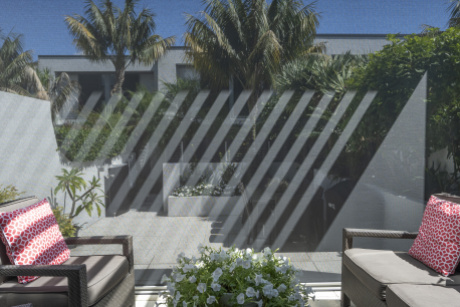
Being able to rotate the louvre blades earns its keep across seasons. Angle the blades towards the sun to draw in warmth on a cool winter morning, or close them to reduce heat gain on a hot afternoon. The easy louvre angle adjustment allows you to make day-to-day changes based on the environment.
- A system matched to the project
Whether you're covering a compact patio with the 180/30 Slimline, specifying a large residential alfresco with the 200/35, or engineering a structure for a coastal site with the 220/45 Alpine, there's a system matched to the project rather than a one-size-fits-all solution.
- The start of your outdoor living space
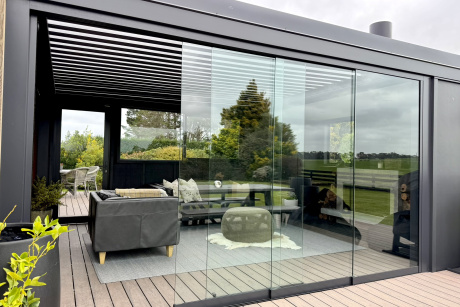
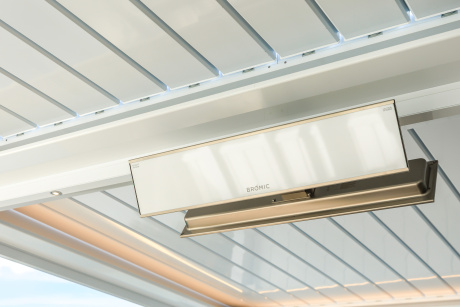
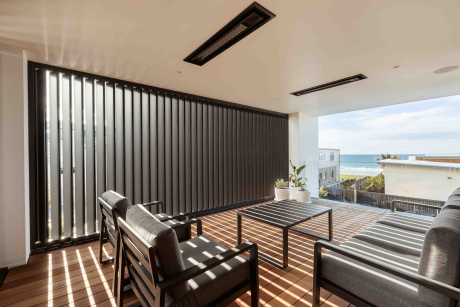
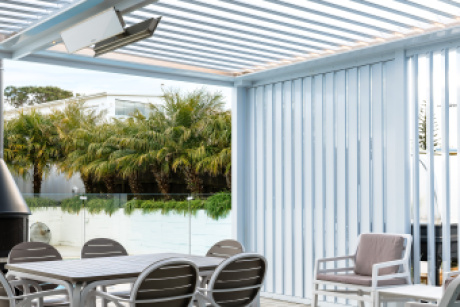
Opening louvre roofs integrate with the building. Add frameless glass infill panels, louvre shutters, outdoor blinds, heating, and more over time to customise your outdoor space.
- Performance depends on proper site engineering
Wind load performance depends on proper engineering for the site. All Louvretec systems are correctly specified for the local wind zone and the relevant AS/NZS standards, and perform reliably under Australian conditions.
About Retractable Louvre Roofs
For anyone working through the pros and cons of retractable roofs, the place to start is what this system can offer compared to opening roofs, and whether that matters for your specific project.
- Sky exposure and all-weather control in one system
A Louvretec retractable roof delivers the best of both worlds. When the blades are retracted, nothing is overhead. When conditions change, the blades return, providing you with the same rotational control as a standard opening louvre roof, allowing you to manage shade, airflow, and weather changes as needed.
- A clean, minimal profile
The Slimline blade profile on both Retract systems keeps the aesthetic clean. At 35mm high, the 220/35 Slimline Retract is Louvretec's thinnest retractable blade, providing minimal overhead presence when in position, nothing at all when retracted.
The 220/45 Alpine Retract brings the same retract functionality to high-wind, coastal, and alpine sites where a less-engineered system wouldn't hold up.
- Flexible across multi-roof projects
Multi-patio roof consistency can be achieved as Retract Louvre Blades can also be specified as standard Opening Roofs too.
For a hospitality venue or commercial build running multiple patio roofs, the design flexibility of our Roof Louvres lets you match the system to each zone.
Which Outdoor Roof Option Suits Your Project?
Here's how each system tends to map to real projects:
Residential Patios and Outdoor Living
For a covered alfresco or patio that gets used regularly across the year, an opening louvre system makes practical sense. The ability to adjust airflow on a hot evening, stay dry through a passing shower, and draw in winter sun without going back inside to change a setting adds up over time. It's the kind of control that becomes part of how you use the space rather than something you notice only when the weather turns.
A Retract Roof suits a residential deck where the open-air experience on clear days is just as important as weather protection. If you want to host a dinner under a completely open sky on a warm evening and pull the blades back overhead when a shower comes through, that's exactly what the system is designed for. The 220/35 Slimline Retract works well here; the slim blade profile keeps the aesthetic clean whether the louvres are overhead or retracted.
Cafes, Restaurants, and Hospitality Venues
For hospitality, the outdoor space needs to remain operational through the variable afternoon conditions that are routine across most of Australia.
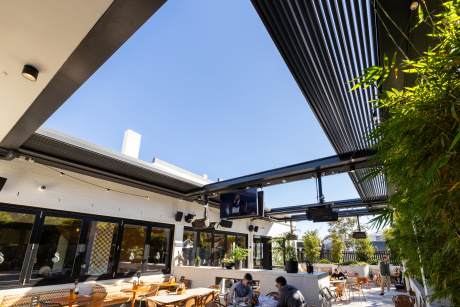
An opening louvre roof handles a passing shower by adjusting blade angle, not by shutting the space down. Add frameless glass infill panels on the sides, outdoor heating, and lighting, and that terrace becomes a functional room across most of the year.
For venues where the open-air atmosphere is central to the experience, such as a rooftop bar, a courtyard space, or a venue that relies heavily on its outdoor setting, a Retract Roof gives you a completely open position on clear evenings while keeping the space protected when conditions change.
The 220/45 Alpine Retract outdoor roofing option is worth considering for coastal venues where wind and salt exposure are factors, given it's engineered specifically for those environments.
Commercial Buildings and Architectural Projects
Commercial buildings and architectural projects demand larger spans, facade integration, and have specific structural requirements. For commercial projects, the structural permanence of a fixed aluminium louvre frame typically aligns better with building requirements and long-term maintenance requirements. An opening louvre roof, specified for the site's wind zone and relevant AS/NZS standards, becomes part of the building's architecture from the start.
Drainage, motorisation, and lighting integration are all easy to include.
For projects with multiple patio roof requirements, both the 220/35 Slimline and 220/45 Alpine systems can be specified as either standard Spiral Pivot Opening Roofs or Retract Roofs on different spans, giving specifiers real flexibility in how each zone of the project is designed and used.
Struggling to Choose a Roof Type? We Can Help
The opening roof vs retractable roof decision comes down to one core question: what does the space need to do?
Louvretec's range is designed to be specified properly for the project, not picked off a shelf. Our dealers work through site conditions, wind zones, span requirements, and the infill and comfort additions that turn a roof into a finished outdoor room.
Enquire with our team to talk through your project, or explore the full opening roof range and retract roof range today.