Getting a louvre roof right isn't difficult. But getting it wrong is expensive. And most of the decisions that determine whether a project lands well happen long before anyone picks up a tool.
This louvre roof design guide walks through the planning process in the order it actually makes sense. Follow it in sequence, and you'll avoid the most common mistakes Australian homeowners make when they plan a louvre roof.
At a Glance:
- Start with how you actually use the space, not with products or colours
- Understand your site conditions before you finalise the size or position
- Decide on your configuration (wall-fixed or freestanding) early, as it affects everything downstream
- Work through design details in order: height, blade orientation, finish, and controls
- Try the Louvretec Virtual Viewer to visualise a louvre roof on your home before you commit
- Check your approval obligations with your local council before dimensions are locked in
Think About How You Use the Space First
It sounds obvious, but most people skip this step. They go straight to product research, get attached to a particular look, and then work backwards trying to make it fit their lifestyle and their site.
Before any of that, spend five minutes thinking honestly about how you currently use your outdoor area and what's stopping you from using it more. This is the foundation of any successful attempt to design an outdoor space in AU.
A covered alfresco that faces west in Queensland has a completely different opening roof design consideration from a south-facing courtyard in Adelaide that you want to open up on a winter afternoon. One needs serious afternoon shade and good ventilation. The other needs to hold warmth and let the winter sun do its work.
Think about who else uses the space. A couple who entertain on Friday evenings has different priorities from a family with young kids who want somewhere to eat dinner outside most nights of the week.
When you're spending time outside, what consistently sends you back indoors? Is it relentless afternoon heat, unexpected rain, or wind that tips over the drinks? Your answers to those questions will help you with louvre roof planning in AU.
How Site Conditions Shape Your Louvre Roof Design
Australia's climate doesn't behave the same way from one region to the next, or even from one block to the next within the same suburb.
The wind coming off the bay in a bayside Melbourne suburb behaves differently from the inland westerlies in Perth. The UV intensity in Darwin is not the same as in Hobart. A louvre roof is an engineered structure that must perform under specific conditions, so it is essential to get the site read right before you design an outdoor space in AU.
Sun and Orientation
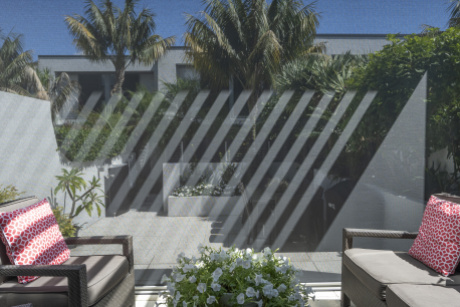
North-facing outdoor spaces get the most sun across the day in Australia, but the angle changes significantly between summer and winter. In midsummer, the sun is high and almost directly overhead, which changes how effectively horizontal blades provide shade. In winter, the sun tracks lower and further north, which can actually make an opening roof a real asset for passive warmth if the blades are positioned correctly.
Walk around your outdoor space at different times of day before you make any decisions. Note where the afternoon heat builds up, where the harsh western sun hits hardest, and which parts of the space are comfortable for the longest portion of the day.
That observation informs blade orientation, roof sizing, and where any side screens or blinds might eventually go.
Wind Exposure
Australia uses a wind classification system under AS/NZS 1170, and the classification that applies to your site directly determines how your louvre roof needs to be engineered. Properties in coastal areas, on elevated blocks, or in known wind corridors, like coastal Queensland, exposed South Australian plains, and parts of Tasmania, require more robust structural specifications than sheltered inner-suburban sites.
This isn't just a technical footnote. If you're on a high-exposure site and you specify a system that isn't rated for your wind classification, you'll have problems. Understanding your wind conditions forms a key part of how to choose a louvre roof that will perform over the long term.
Rain and Drainage
A fully closing louvre roof channels water into an integrated gutter and downpipe system. Where that water goes matters, particularly in states where councils require it to connect to the household stormwater system rather than discharge onto the ground.
NSW and SA, in particular, have documented requirements around this. If you're adding a roof to an existing patio or deck, understand how the drainage will tie in before the structure goes up, as retrofitting drainage is considerably more disruptive than planning for it from the beginning.
Wall-Fixed or Freestanding?
Once you've got a feel for how you want to use the space and what your site is working with, the next decision is how the structure sits on your property.
Wall-Fixed
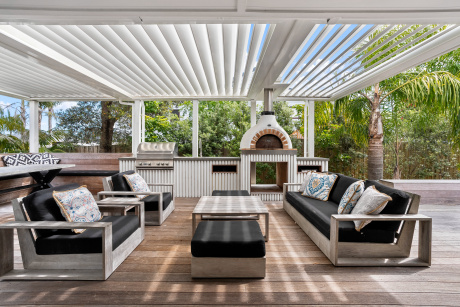
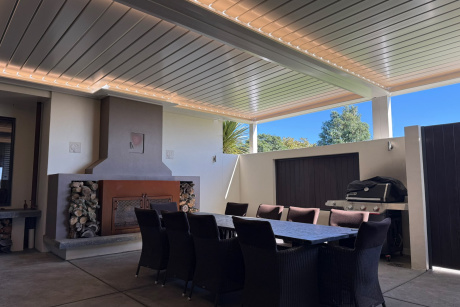
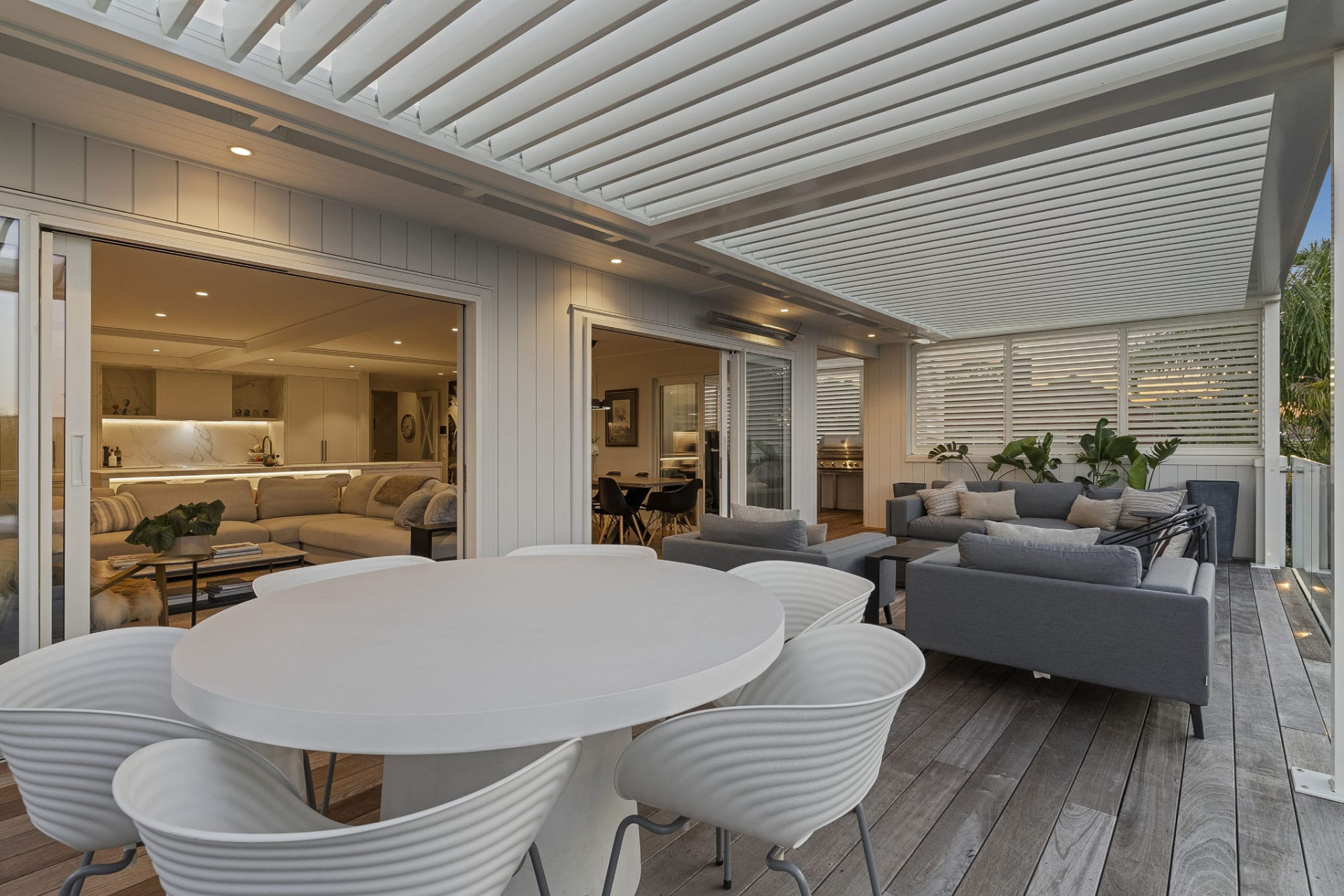
Wall-fixed louvre roofs attach directly to your home along one edge. They're the natural choice for covered alfresco areas that connect to an internal living space, such as a kitchen or dining room that opens out.
The roof extends the interior ceiling plane outward, which creates a strong visual and physical connection between inside and outside. Before any wall-fixed system can be installed, the wall itself needs to be assessed for load-bearing capacity, something your Louvretec dealer will work through with you during the design stage.
Freestanding
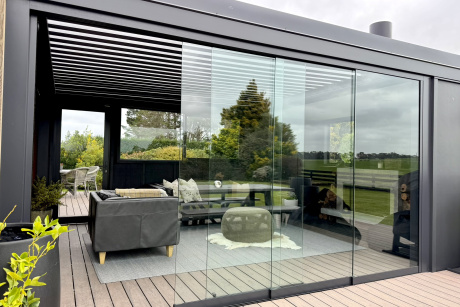
Freestanding structures sit on their own posts, independent of the house. They work well in spaces that aren't adjacent to the main building, such as a pool area, a separate entertaining pavilion, or a courtyard that doesn't align neatly with the home's exterior walls.
Because you're not constrained by the existing wall or roofline, freestanding structures offer greater flexibility in size, height, and positioning.
The In-Between Option
Some projects are more complex than either of these categories suggests.
A structure that attaches to the house on one side and stands free on the other, or one that spans between two existing walls, is more common than you'd think, particularly on older homes or renovations where the outdoor area has an irregular footprint.
These configurations are worth discussing early, especially if you're thinking about a louvre roof before building work begins on a new home or addition, because the structural and approval implications vary.
Louvre Roof Design Choices
Height
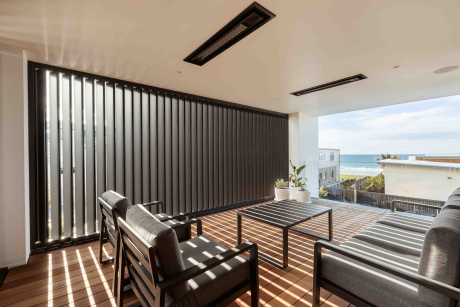
Roof height affects both the space's atmosphere and the blades' practical performance. A lower roof creates a more contained feel, which suits smaller alfresco areas or spaces where you want a sense of enclosure. A higher roof makes the space feel more open and airy, but it can reduce how effectively the blades manage shade as the sun moves across the sky.
If the structure is wall-fixed, your existing eaves line, soffit height, and the levels of any nearby doors or windows will all set practical boundaries for where the roof can sit.
Blade Orientation
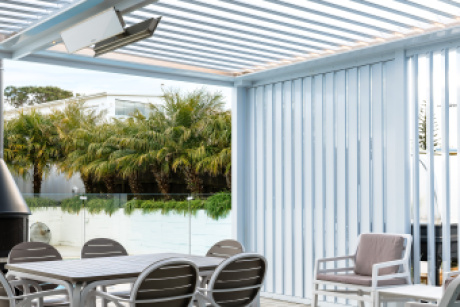
Blades can run parallel or perpendicular to the house. Parallel is generally the more functional choice, as it gives you finer control over how much direct sun reaches the interior living spaces behind the outdoor area, which is particularly valuable during the hotter months. It also tends to sit more naturally with horizontal building elements like cladding, decking, and window frames.
On larger roof spans, a double-bay layout with a mid-beam offers greater flexibility in blade direction, which can be useful on sites with unusual sun angles or complex roofline relationships.
Colour and Finish
Louvretec's opening roofs are available in Powdercoat, anodised, and woodgrain finishes.
From matt black to warm whites and earthy tones, Powdercoat offers the widest colour range and is the most popular choice for contemporary Australian homes. Anodised finishes have a different quality; the colour bonds into the aluminium itself, so the material's texture remains visible. It reads as more refined and architectural, and suits projects where the roof needs to integrate quietly rather than stand out. Woodgrain finishes give you the appearance of timber without the maintenance demands that come with real timber in the Australian climate.
When you plan a louvre roof's colour, consider the existing joinery, cladding, and roofline. And check your shortlisted colours in the shade and in direct sun. Structures like this spend a lot of time casting shadows on themselves.
Motorised or Manual?
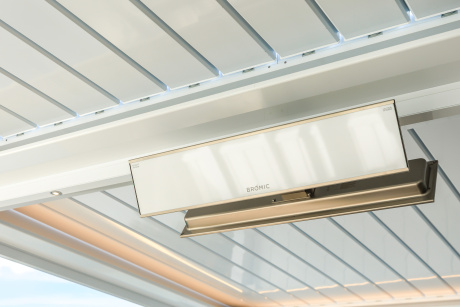
Manual systems use a winder mechanism and are reliable, low-maintenance, and well-suited to smaller spans. Motorised systems are operated by remote or wall switch, and can include rain sensors that close the blades automatically when rain is detected. If you have furniture or soft furnishings under the roof, or if the space is sometimes unattended, that automated response is worth having.
Louvretec's systems are built around the award-winning Spiral Pivot mechanism, which rotates the blades up to 180 degrees while keeping all moving parts and the motor fully concealed within the frame. The concealed design protects the drive system from the elements and keeps the structure looking clean from underneath, regardless of blade position. Both motorised and hand-operable formats use the same drive system.
Opening or Retractable Roof?
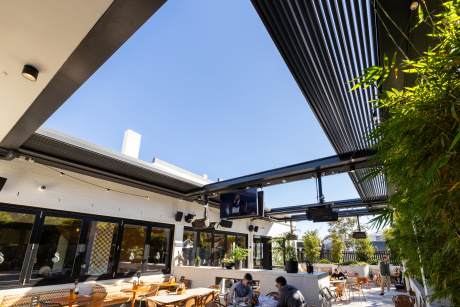
A standard opening roof keeps the blades in place overhead at all times, rotating to control light, ventilation, and weather protection. A retractable roof takes it further. When you want an open sky above you, the blades stack to one end of the frame and retract completely out of view. On a clear evening or a warm winter afternoon, that's a noticeably different experience. When the weather changes, they extend back and operate like a standard opening roof.
For opening roof planning in AU, the choice is really about how much visual openness you want and how often you'll want a completely unobstructed sky.
See How a Louvre Roof Looks on Your Home Before You Commit
Not being able to visualise a louvre roof on your actual home is one of the most common sources of hesitation at the planning stage.
Before you sit down with a dealer, spend some time with the Louvretec Virtual Viewer. It lets you explore different roof configurations and finishes in a realistic home environment, so you can work out what appeals and what doesn't before making any real decisions.
It won't replace the design conversation with your dealer, but it makes that first meeting far more useful when you arrive with a clearer sense of what you're looking for.
What You Need to Know About Approvals for Louvre Roofs in Australia
Approval requirements for louvre roofs in Australia vary by state and local council, and the details of your site matter. There's no single national rule that covers every situation.
As a general starting point, structures under 25m² in floor area, under 3 metres in height, positioned behind the front building line, and set back at least 900mm from the boundary often qualify as exempt development in most states. But there are meaningful differences at the state level: Queensland imposes stricter structural requirements due to cyclone wind ratings. Victoria may require permits where a roof can fully close and is considered an enclosed structure. NSW has specific exempt development criteria, including limits tied to the total floor area of the dwelling.
Several factors can trigger an approval requirement regardless of size or location:
- Motorised systems require a licensed electrician for hardwiring
- Drainage connecting to the stormwater system may need certification
- Structures that exceed the existing fascia line generally require approval
- Any work on a heritage-listed property or in a heritage overlay will almost certainly require a permit.
The safest approach to louvre roof planning in AU is to check with your local council or a registered building certifier before you finalise your dimensions. Your Louvretec dealer can help you understand what's likely to apply based on your project and state, and resolving this at the planning stage keeps your timeline intact.
Ready to Start Planning Your Louvre Roof?
A louvre roof is a long-term addition to your home. Getting the planning right means the finished space works the way you need it to, performs in your specific climate, and holds up over time. It doesn't require months of deliberation, but it does reward thinking things through in the right order.
Louvretec has been designing and supplying opening roof systems in Australia for nearly 30 years. With a national dealer network, local expertise on how to choose a louvre roof is available wherever your project is based.
Find your nearest Louvretec dealer and start the conversation. Or take a look at the Virtual Viewer first and get a feel for what's possible before your first meeting.